Randena Walsh was born and raised in Bremerton, Washington, and grew up on Puget Sound. Her studio is on Gamble Bay on the Kitsap Peninsula, surrounded by the native flora and fauna that supply most of her subjects. She received her Bachelor of Arts degree from The Evergreen State College in 1996, where she was a three-year recipient of the Alfred G. & Elma M. Milotte scholarship for undergraduate work in painting and natural history studies. That dual foundation — painting and natural history — is the organizing logic of her practice. She looks at the Pacific Northwest as a field naturalist would: specific species, specific habitats, specific seasonal light. Her drawings and paintings are a direct response to the places she encounters while hiking or kayaking the trails and waters of the Olympic Peninsula.
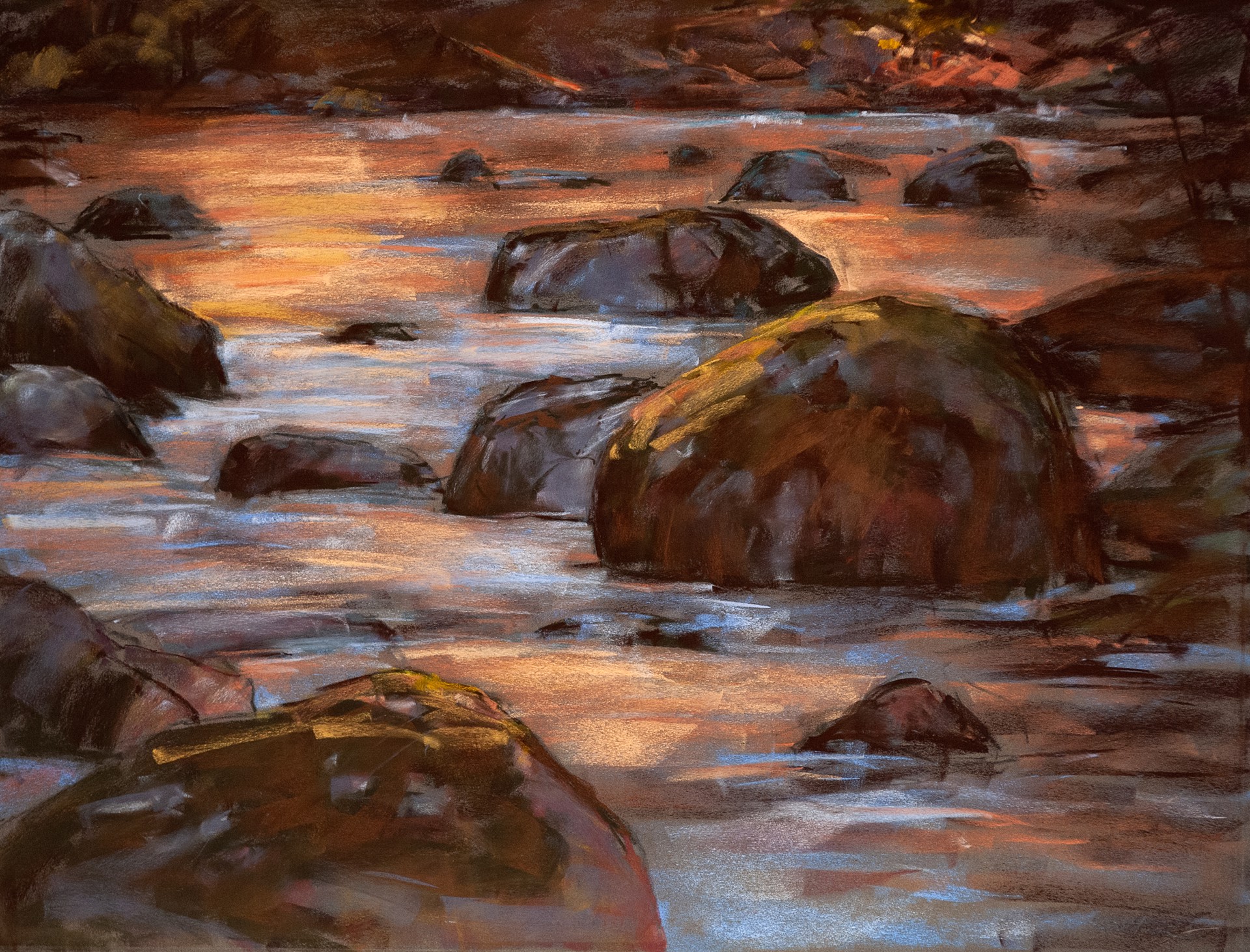
In Duckabush River Late Afternoon, the painting bathes boulders in amber and rust-orange while the water between them reads as slate blue and dove gray, the artist layering thick impasto across the rocks' surfaces so they protrude almost tactilely from the canvas. Compositionally, the boulders anchor the foreground in a descending diagonal recession, their weight counterbalanced by the luminescent water that threads through the spatial gaps, creating a rhythm of solid and liquid forms. Walsh's restrained palette and deliberate brushwork avoid melodrama, yet the painting risks feeling more precious than observed—a landscape prettified rather than confronted. Walsh works primarily in pastel and watercolor — media that reward immediacy and resist overworking. She earned the title of Distinguished Pastelist from the Northwest Pastel Society in 1995 and has been a member of Women Painters of Washington for over two decades, receiving awards in both organizations’ juried exhibitions consistently since the early 2000s. Her work has been included in the Whatcom Museum’s 2005 catalog An Enduring Legacy: Women Painters of Washington 1930–2005 and in three volumes of North Light Books’ Strokes of Genius series (2009, 2011, 2012) as well as The Best of Drawing Light and Shadow (2009), all edited by Rachel Rubin Wolf. She was a finalist in The Artist’s Magazine 23rd Annual Art Competition in 2006. She has taught design at Olympic College and demonstrated technique as a guest artist for regional arts organizations.
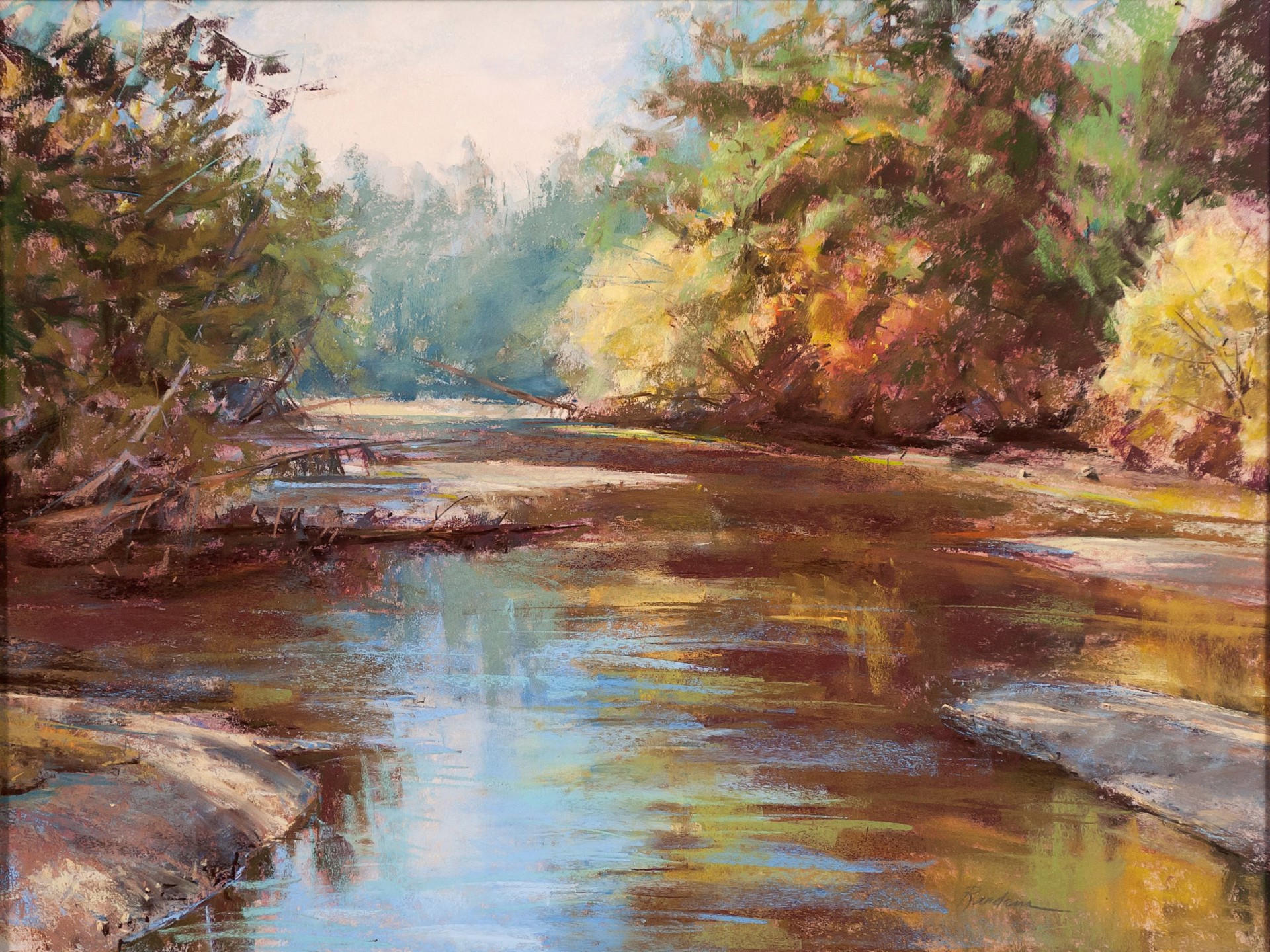
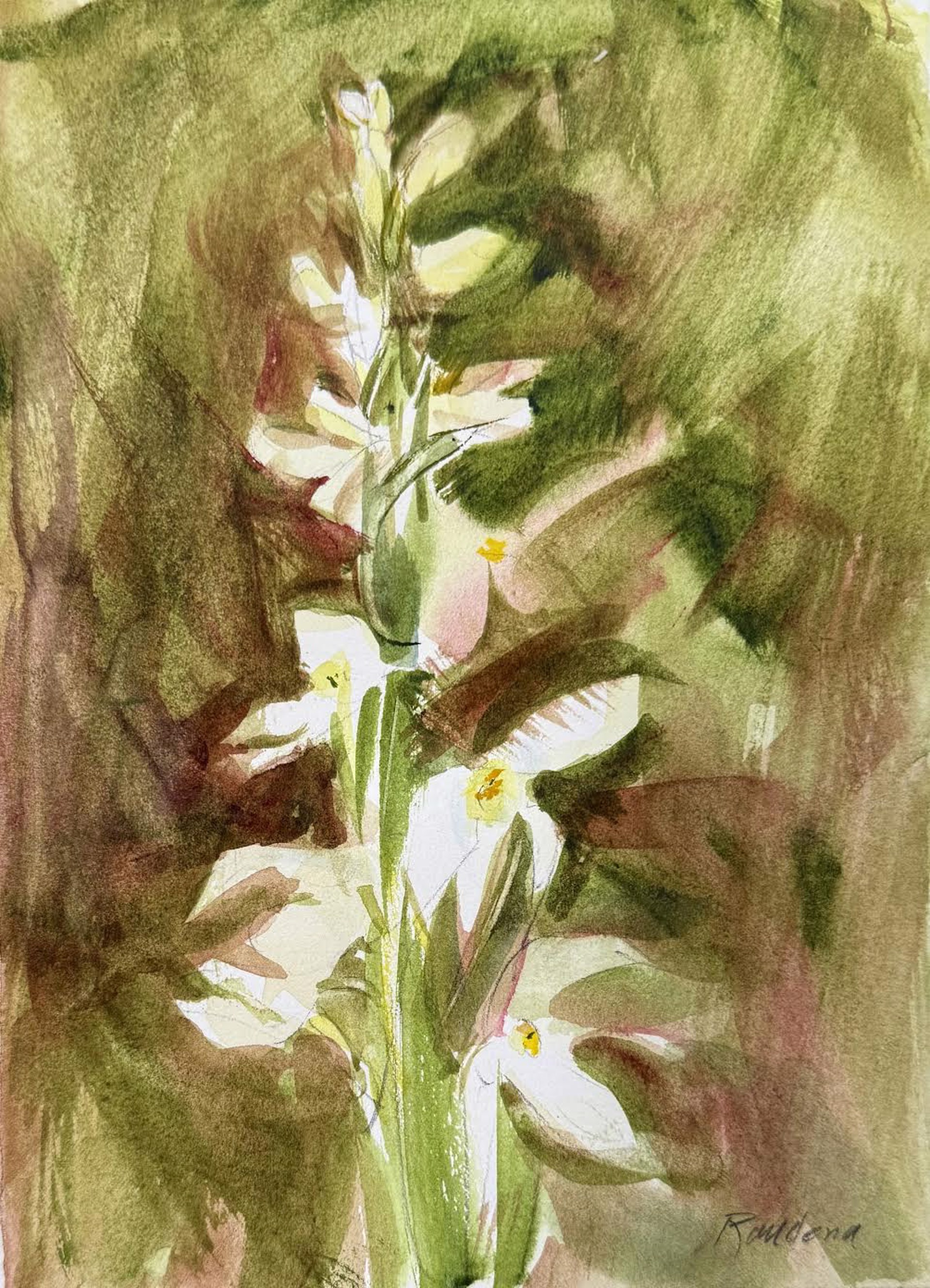
Her subjects at JG include Pacific Northwest birds — bushtit, crossbill, Pacific slope flycatcher, red-breasted sapsucker, white-crowned sparrows, vireo — alongside creek and river landscapes, botanical studies, and small wildlife. The work is intimate in scale and precision but expansive in what it asks the viewer to attend to.
Gesture and expressive use of line are key elements in my work. Whether drawing or painting, a dynamic rhythm flows from energetic mark-making. Sensitive, lively lines act as a conduit for my emotions. Only the essential is expressed.